Tesla owners in Scarborough ask about PPF more than owners of any other vehicle. The reason is straightforward: Tesla's factory paint is thin and soft, it chips faster than paint on comparable vehicles, and most Model 3 and Model Y owners plan to keep their cars long enough for chip damage to matter. This post is about the PPF decision specifically for Teslas -- which panels to prioritize, which zones get overlooked, and how to think about coverage without over-buying.
If you want the full tier breakdown (stinger vs partial vs full front vs track pack vs full wrap) with prices, that's covered in the PPF coverage tiers guide. This post focuses on what's different about a Tesla.
Why Tesla Paint Needs More Coverage Than Most Vehicles
Tesla's paint process uses water-based formulations across its Fremont and Shanghai factories. The result is a clear coat that runs measurably thinner and softer than what you'll find on a BMW 3 Series, Honda Civic, or Lexus RX. Independent paint-thickness readings on new Teslas consistently come in thinner than what you'll find on comparable German and Japanese vehicles -- thin enough that it changes how the paint handles chips.
Softer, thinner paint means three things in practice:
Rock chips happen faster and penetrate deeper. A pebble kicked up at highway speed on the 401 that leaves a surface mark on a hard factory finish will punch clean through Tesla clear coat into the base coat. The frunk hood and front bumper on a Model 3 or Model Y that's done six months of 401 commuting will show visible chipping that a similarly-used Camry simply wouldn't.
Swirl marks show up immediately. The first time someone dries a Tesla with a non-ideal towel or runs it through a brush wash, swirls appear. This isn't a storage problem -- it's a material property of the paint.
Pearl white and red are the worst. Tesla's Pearl White Multi-Coat and Midnight Red are the two finishes most owners report getting chipped the fastest. White shows every chip because bare primer underneath is grey. Red shows chips as dark pinpoints on a saturated surface.
The ceramic coating post covers why Teslas need coating too. PPF and ceramic do different jobs -- PPF is the physical chip shield, ceramic is the chemical and UV barrier. For a Tesla doing highway miles, you want both.
The High-Wear Zones That Are Specific to Teslas
Every front-end PPF job covers the obvious zones: hood, front bumper, fenders, mirrors. On a Tesla, there are four additional areas that get overlooked and should be discussed with your installer before booking.
Frunk Hood Leading Edge
The Model 3 and Model Y frunk (front trunk) lid is the single panel that takes the most highway chip damage on these vehicles. Its geometry is slightly more upright than a traditional sloped hood, which means it catches debris at a less glancing angle. The leading 20-25 cm of the frunk lid should always be in any coverage package you're quoting -- some shops include it automatically in a "full front," others do not. Ask specifically.
Rocker Panels and Rear Arch
Tesla Model 3 and Model Y do not come with mudflaps from the factory. The rear wheels throw road debris -- sand, gravel, salt crystals, slush -- directly at the rear quarter panels and lower rocker panels. On Ontario roads in winter, this sandblasting effect is severe. By year two without PPF, most Teslas show visible pitting and chipping on the rear lower quarter panels from their own rear tires.
XPEL and SunTek both offer precut kits for Tesla rear arch coverage. It is not an exotic add-on -- it is a standard item at any shop doing regular Tesla work. If you're on the 401 between Scarborough and Markham daily and you want the paint to hold up over five years, include the rear arches.
Door Cup Handle Areas
Tesla's door handles (on older Model S and Model X) and the door cup areas on Model 3 and Model Y accumulate scratches from fingernails, rings, and keys over daily use. A small cut of PPF behind and around each door handle costs almost nothing to add and prevents some of the most visible daily-wear damage on these vehicles.
Charging Port Door
The charging port door on the driver's rear quarter panel takes repeated contact from charging cables, especially in public charging situations. A small piece of film around the port edge prevents scuffing and paint wear. Takes five minutes during any install. Worth including.
Which Coverage Tier Makes Sense for a Tesla
The answer depends on how you use the car and how long you plan to keep it.
Daily 401/Highway Commuter (Model 3 or Model Y)
Minimum: Full Front, $2,800-$4,200. Full hood, full bumper, fenders, mirrors, headlights. This covers 95% of chip damage for a highway commuter and is the right starting point for any Model 3 or Model Y that sees Kingston Road, the 401, or the 404 regularly.
Recommended: Track Pack, $3,800-$5,400. Add the rocker panels and rear quarters to account for the mudflap gap. Five years from now, the front will look clean and the rear lower panels won't be pitted from the owner's own tires throwing debris.
Add: frunk leading edge, door handle areas, charging port. These are small add-ons to any install.
Garage-Kept Model S or Model X (Weekend or Low Mileage)
Full Front is usually enough, $3,200-$4,800 range (Model S/X pricing runs slightly higher than Model 3/Y due to surface area). The larger hood and longer profile mean more sq footage per tier, but the driving patterns of most Model S and Model X owners in Scarborough tend toward lower daily mileage.
Lease Return or Short-Term Ownership (Any Model)
Partial Front, $1,800-$2,800. Bumper, partial hood, fenders, mirrors. This covers the panels most likely to trigger lease-end damage charges. Not the most comprehensive protection, but it targets the zones that matter at lease return inspection.
Keeping the Car 7+ Years
Full Wrap consideration, $7,000-$9,500 for a Model 3 or Model Y on XPEL Ultimate Plus. Tesla's paint is the strongest argument for full wraps of any non-exotic vehicle. The combination of thin paint, no mudflaps, and long ownership creates a compelling case. The full wrap on a 7-year-old Tesla that's been wrapped since year one will look better than a 4-year-old unprotected Tesla. Whether the math works depends on the vehicle's value and your priorities.
Most Tesla owners we see at the shop land on the track pack with rear arches -- that's the coverage that holds up realistically over 5-6 years of Ontario driving.
Film Choice for Teslas
ACR is an authorized installer for XPEL and SunTek. Either film is appropriate for Tesla coverage. The practical difference:
XPEL Ultimate Plus wraps edges cleanly on the Model 3 and Model Y frunk lid -- the geometry there is tight and XPEL's stiffness holds well on those panel shapes. Most installers who do high volume Tesla work have strong opinions on XPEL for the front-end geometry on these vehicles.
SunTek Ultra and Reaction are slightly more pliable, which helps on the complex compound curves of the Model X rear bumper and the Model S front fascia. For Model 3 and Model Y standard panel shapes, both films perform equally well.
LLumar film is also available. A brief note on 3M: it's another brand you'll see quoted around the GTA and it has a solid track record, but ACR doesn't install it -- our authorized brands are XPEL, SunTek, and LLumar, and that's what's covered under manufacturer warranty here.
All three brands we carry use computer-cut templates specific to your Tesla's exact model and year via digital design access programs. No freehand cutting on the vehicle.
What the Install Involves for a Tesla
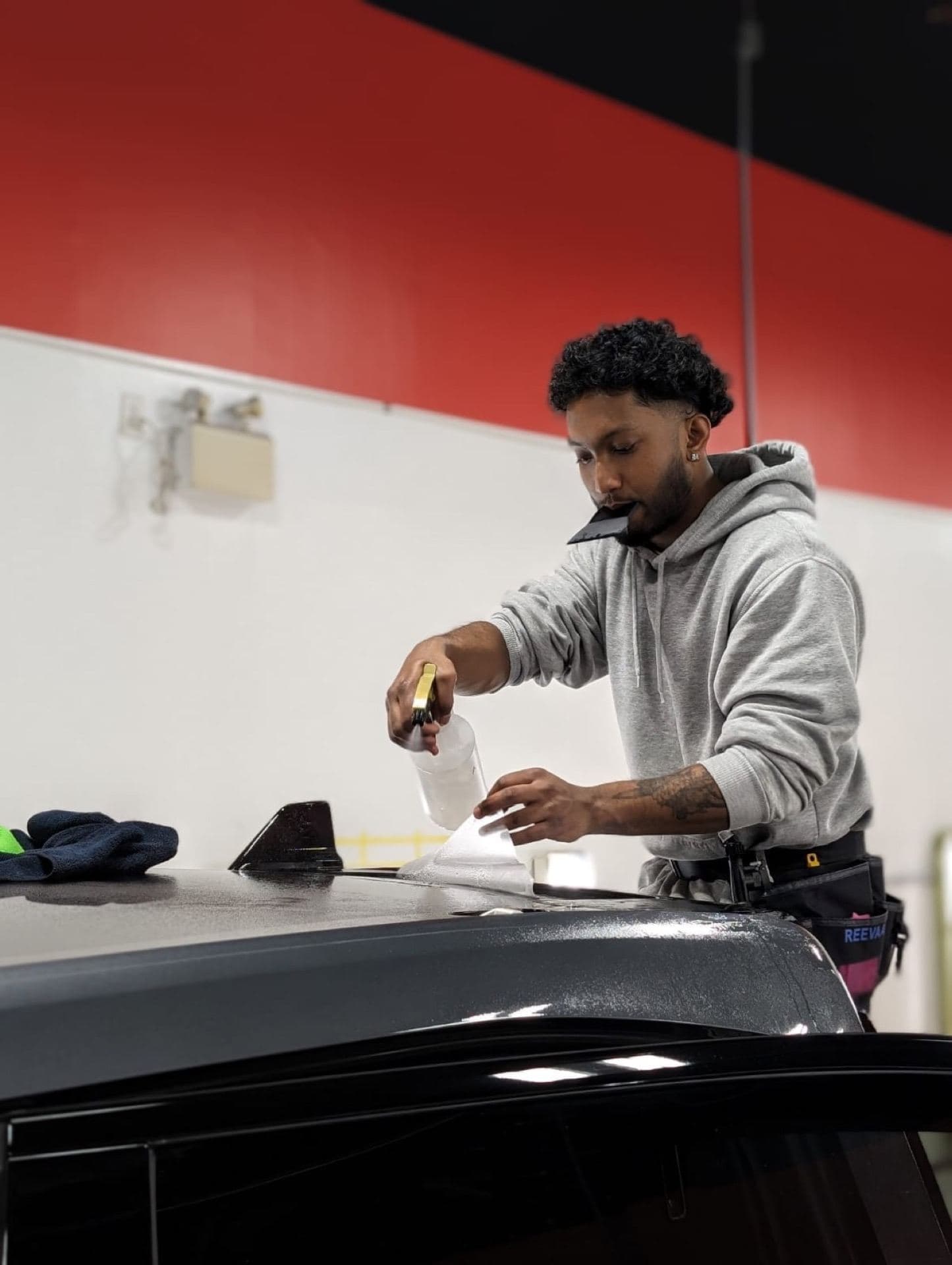
Every Tesla PPF install at ACR starts with a full decontamination: foam wash, iron remover, clay bar. Tesla paint picks up iron brake dust contamination faster than harder paints because the surface is more porous -- decontamination matters more on these vehicles, not less.
Edges are wrapped on every panel. No visible cut lines on the paint face. The frunk, front bumper, and hood panels all get their edges tucked behind trim and rubber seals.
XPEL and SunTek both back their warranties when installed by an authorized shop. That warranty is a 10-year manufacturer warranty against yellowing, cracking, peeling, and delamination -- and it transfers with the vehicle if you sell it, which matters for resale.
After install, the film has a 7-day cure period. Some light haze or cloudiness in the first few days is normal -- residual water vapor under the film working out. It clears completely. No car washes for the first 7 days after install.
Pairing PPF With Ceramic on a Tesla
PPF handles the physical chip damage. Ceramic coating handles UV fade, chemical resistance, and makes the film surface easier to clean. On Pearl White, the difference between a ceramic-topped PPF install and bare PPF is visible -- the film develops a deeper, wetter surface that cleans with less effort.
The typical Tesla package at ACR is full-front or track-pack PPF plus a Gold-tier ceramic coating over the entire vehicle including the film. That runs $3,500-$6,500 depending on coverage selected. It's the right setup for a Model 3 or Model Y that's going to be driven and kept.
If you're making the PPF decision, it's also worth reading the ceramic vs PPF comparison -- it explains why the two aren't either/or for most Tesla owners, and which driving patterns determine the priority order.
Book a Tesla PPF Consultation in Scarborough
Call ACR Detailing at (647) 963-5524 or use the PPF configurator to build your package by coverage zone and see pricing for your specific Tesla model. The configurator gives you real-time pricing so you can get the numbers before calling.
Aidan will walk through your driving habits, mileage, and ownership timeline to recommend coverage that actually matches. No one-size-fits-all packages.
ACR Detailing is at 29 Oakmeadow Blvd in Scarborough. We serve owners across Scarborough, Markham, North York, and Pickering.
Related reading: Tesla ceramic coating in Scarborough - PPF coverage tiers and 2026 pricing - How to choose a PPF installer in Scarborough