If you're researching paint protection for your vehicle, you've probably landed on two options: ceramic coating and paint protection film (PPF). Both are professional-grade solutions, both protect your paint, and both are available at ACR Detailing in Scarborough. But they work in fundamentally different ways, protect against different threats, and sit at different price points.
This guide breaks down exactly how ceramic coating and PPF compare so you can make the right decision for your vehicle, your driving habits, and your budget.
What Is Ceramic Coating?
Ceramic coating is a liquid polymer applied to your vehicle's exterior surfaces. It chemically bonds with the factory clear coat to create a semi-permanent layer of protection. The coating is composed of silicon dioxide (SiO2) nanoparticles that fill microscopic pores in the paint surface.
Once cured, ceramic coating creates a hydrophobic, UV-resistant, and chemically resistant barrier. Water beads and rolls off, dirt has a harder time bonding, and contaminants like bird droppings or tree sap are easier to wash away before they can cause damage.
Ceramic coating does not add physical thickness to the paint. It does not absorb impacts. Its strength is chemical and environmental protection paired with an enhanced gloss finish.
At ACR Detailing, ceramic coating packages start at $500 for a 3-year Silver tier and go up to $1,300 for our Platinum package with 5 to 14 years of protection.
What Is Paint Protection Film (PPF)?
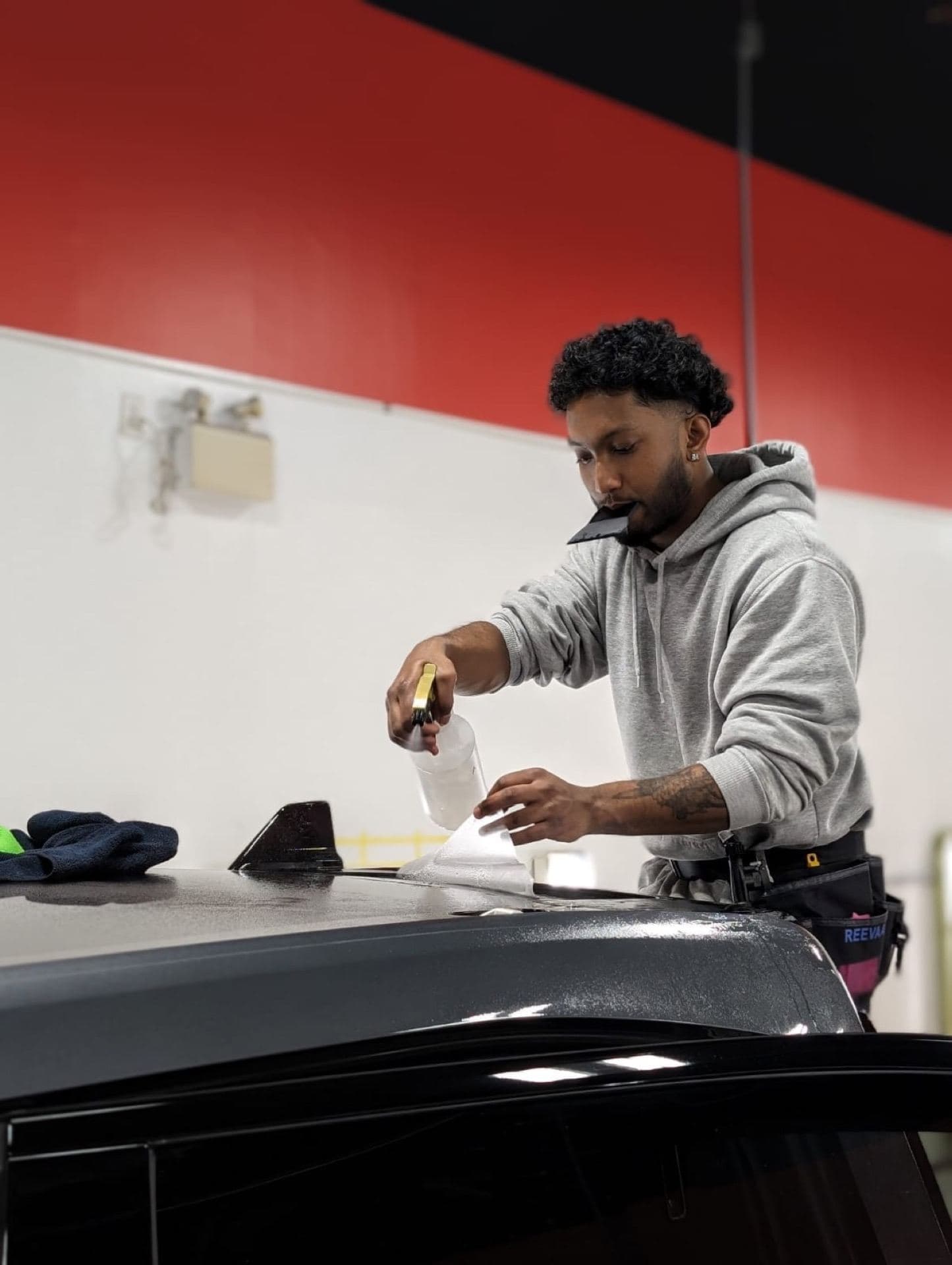
Paint protection film is a thick, clear thermoplastic urethane film that is physically applied to the vehicle's painted surfaces. The film typically ranges from 6 to 8 mils thick and acts as a physical barrier between your paint and the outside world.
PPF is designed to absorb impacts. Rock chips, road debris, sand, gravel, minor scratches, and even shopping cart dings are absorbed by the film instead of your paint. High-quality PPF also has self-healing properties, meaning minor scratches in the film disappear when exposed to heat from the sun or warm water.
At ACR Detailing, PPF packages start at $800 for partial front-end coverage and can reach $5,500 or more for a full vehicle wrap, depending on the vehicle size and complexity.
Head-to-Head Comparison
| Feature | Ceramic Coating | PPF |
|---|---|---|
| Protection Type | Chemical and environmental | Physical impact absorption |
| Rock Chip Protection | No | Yes |
| UV Protection | Yes | Yes |
| Hydrophobic | Yes (excellent) | Moderate (improved with ceramic top coat) |
| Self-Healing | No | Yes (heat-activated) |
| Gloss Enhancement | Significant | Maintains factory finish |
| Durability | 3 to 14 years | 5 to 10 years |
| Cost (ACR Detailing) | $500 to $1,300 | $800 to $5,500+ |
| Coverage | Entire vehicle | Full or partial (high-impact areas) |
| Maintenance | Regular hand wash, occasional boost | Regular wash, avoid harsh chemicals |
| Best For | Daily drivers, ease of cleaning, gloss | Highway drivers, new vehicles, high-value cars |
When to Choose Ceramic Coating
Ceramic coating is the right choice when your primary concerns are appearance, ease of maintenance, and protection from environmental damage. Here are the situations where ceramic coating makes the most sense:
Daily drivers in urban areas. If you're commuting around Scarborough, driving on the 401 or DVP, and parking in lots throughout the day, ceramic coating protects against the chemical exposure your paint faces constantly: road salt, bird droppings, tree sap, industrial fallout, and UV degradation. The hydrophobic surface also means less time and effort spent washing.
Budget-conscious protection. Starting at $500, ceramic coating provides whole-vehicle protection at a fraction of the cost of full PPF coverage. For many vehicle owners, this is the sweet spot between doing nothing and going all-in on film.
Show car or weekend vehicle appearance. If your vehicle is garaged most of the time and you're primarily concerned with maintaining a deep, wet gloss finish, ceramic coating delivers the most dramatic visual enhancement.
Leased vehicles. If you're returning the vehicle in three years, a Silver-tier ceramic coating is a smart investment that keeps the paint in return-condition quality.
When to Choose PPF
PPF is the right choice when physical protection is your top priority. These situations call for film:
Highway commuters. If you drive the 401, Highway 7, or any high-speed road regularly, rock chips are a constant threat. PPF on the hood, fenders, bumper, and mirrors absorbs the impact that would otherwise leave chips in your paint.
New vehicle delivery. The best time to protect a car is when it's brand new. Applying PPF before the first rock chip means your paint stays in factory condition for the life of the vehicle.
High-value or collector vehicles. If resale value matters, PPF is the most effective way to preserve the original paint. A well-maintained PPF installation can be removed years later to reveal showroom-condition paint underneath.
Vehicles driven on gravel or construction routes. If your work takes you through unpaved roads, construction zones, or areas with heavy debris, PPF handles the punishment that ceramic coating cannot.
When to Combine Both: Ceramic Coating Over PPF
The most comprehensive protection package is PPF on high-impact areas (full front end, rocker panels, door edges) with ceramic coating applied over the entire vehicle, including over the PPF.
This combination gives you:
- Physical impact protection where you need it most
- Chemical and environmental protection across the entire vehicle
- Hydrophobic properties on every surface, including the film
- Enhanced gloss on both the coated paint and the PPF
- Easier cleaning and maintenance across the board
At ACR Detailing, many of our clients in Scarborough choose this combination, especially on new vehicle deliveries and higher-end cars. The investment is larger upfront, but the result is the most complete paint protection available.
Maintenance Differences
Ceramic coating requires regular hand washing with a pH-neutral shampoo. Avoid automatic car washes with brushes, and apply a ceramic boost spray every few months to maintain hydrophobic performance. An annual maintenance detail helps extend the coating's lifespan.
PPF requires similar washing care. Avoid pressure washing at close range near the film edges, and keep the film clean to prevent staining over time. PPF is more forgiving than uncoated paint in terms of daily abuse, but it does need attention to look its best.
Making Your Decision
Start by thinking about what you're protecting against. If it's environmental damage, chemical exposure, and you want a deep gloss finish with easy maintenance, ceramic coating is the answer. If it's physical damage from road debris, scratches, and impacts, PPF is the answer. If you want both, the combination package is the way to go.
If you're not sure, that's exactly what consultations are for. Aidan at ACR Detailing will assess your vehicle, ask about your driving habits and goals, and recommend the right protection. There's no pressure and no obligation.
Get a Professional Assessment
Call ACR Detailing at (647) 963-5524 to book a free paint protection consultation. We'll walk you through the options, show you product samples, and put together a custom quote based on your vehicle and your priorities. We're located at 29 Oakmeadow Blvd in Scarborough, serving the entire GTA.