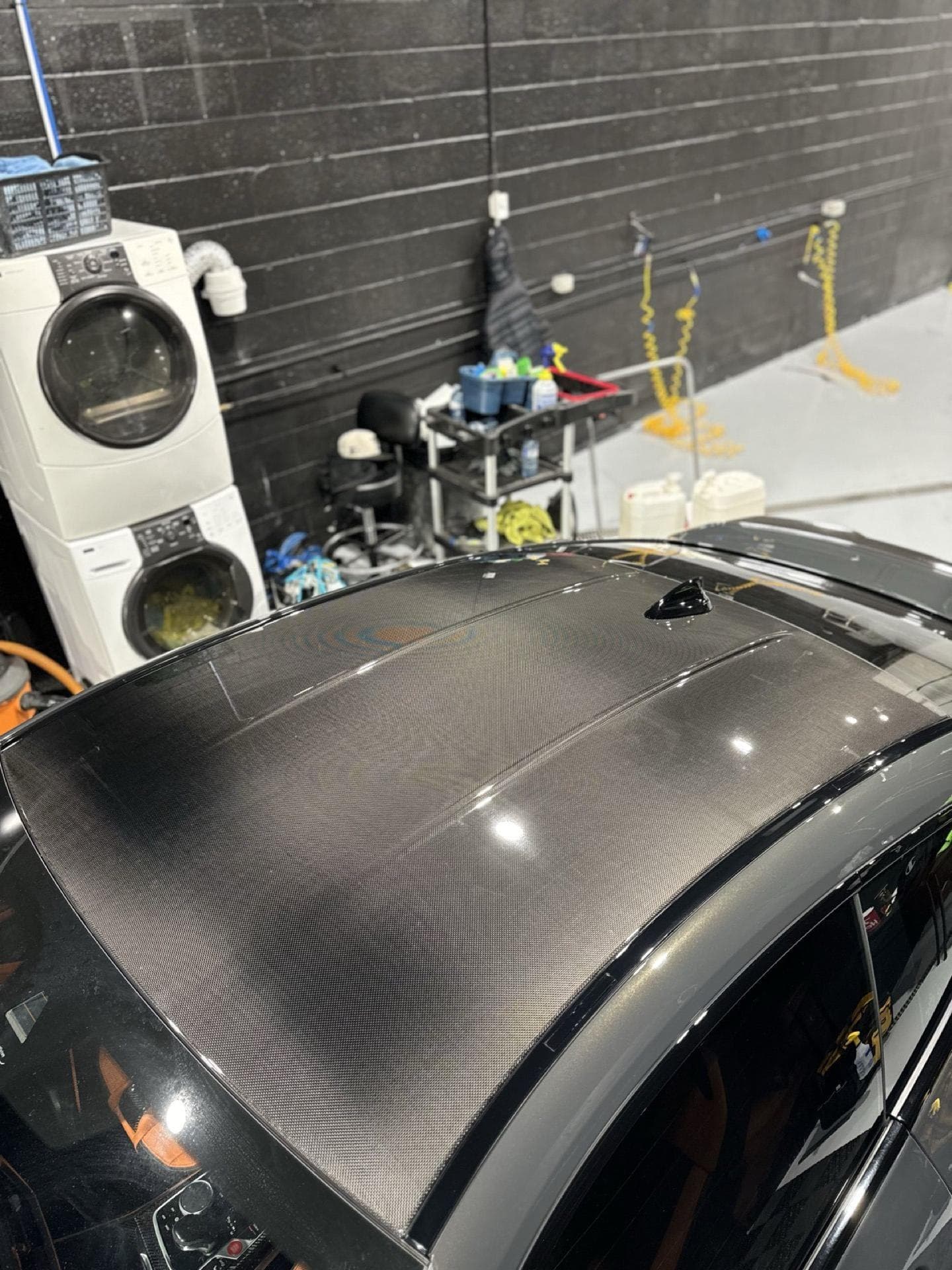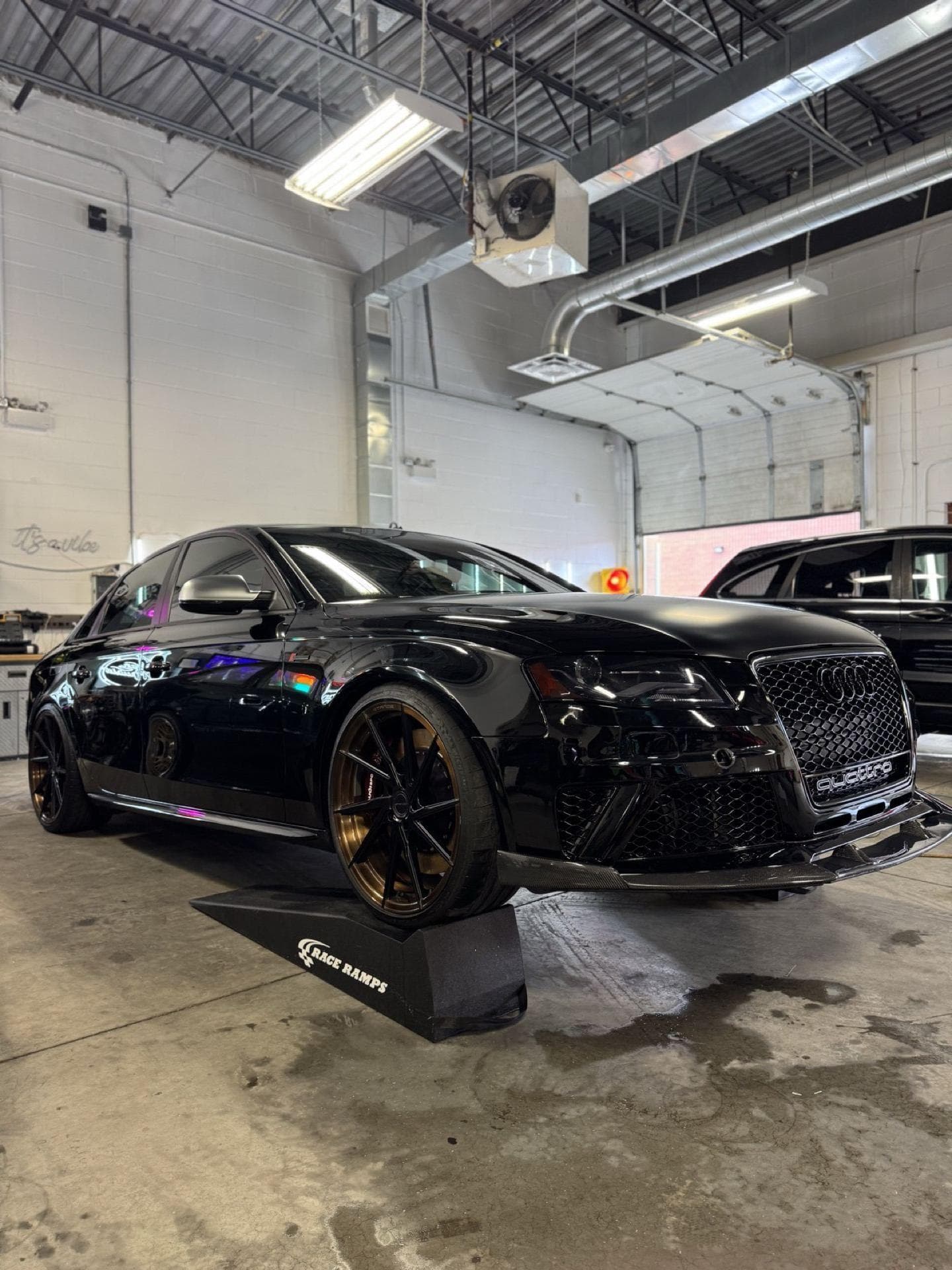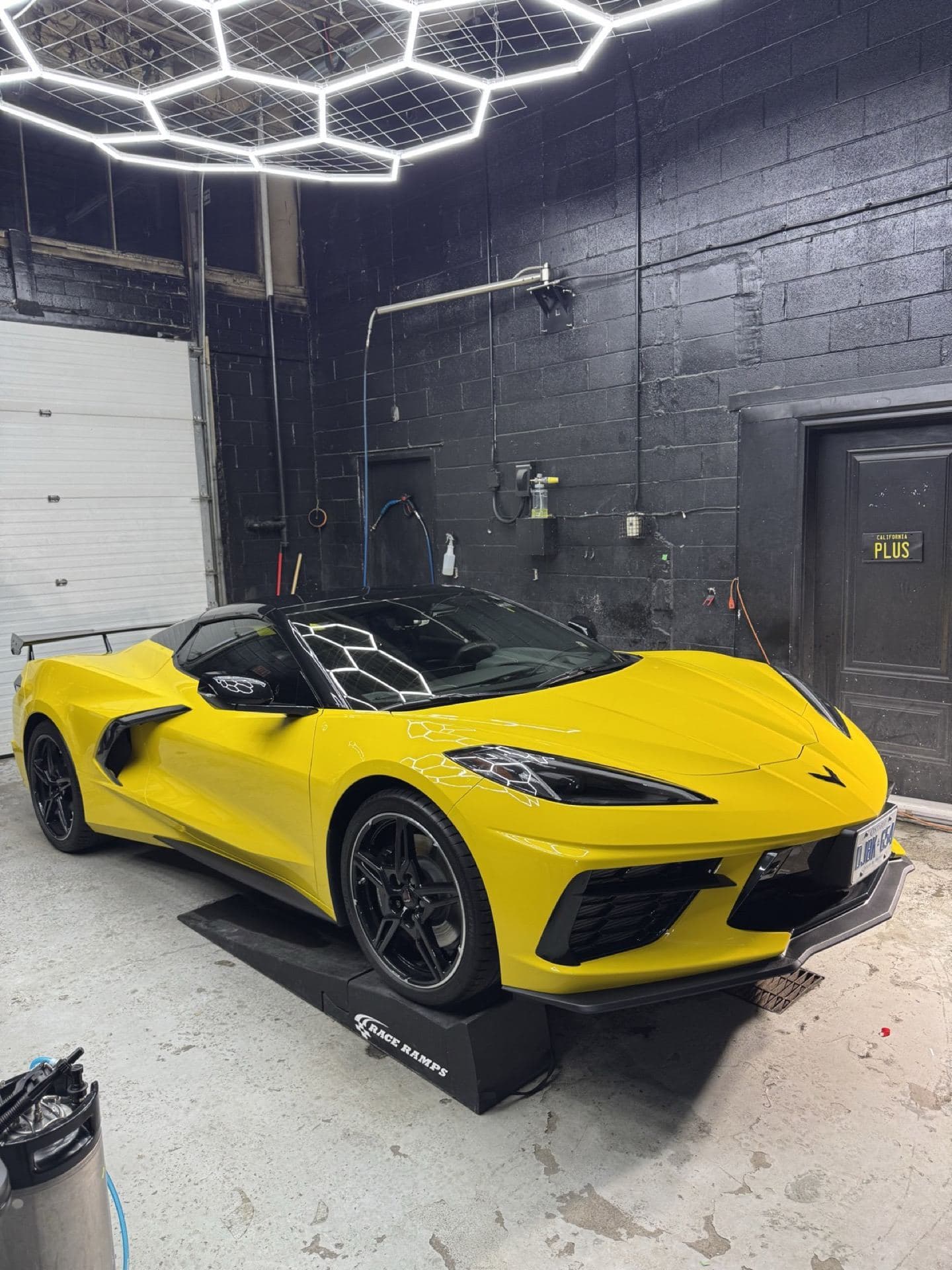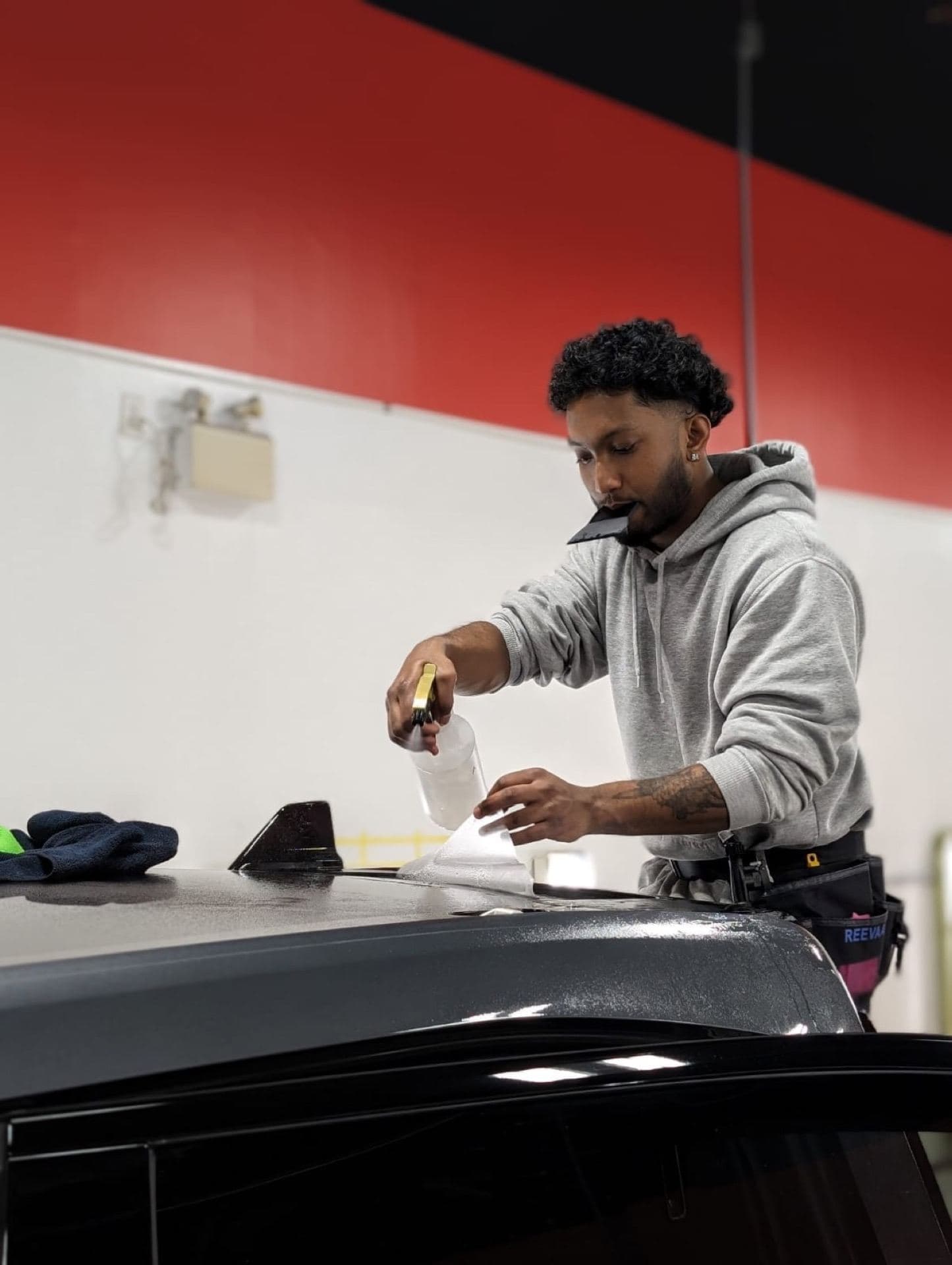
Most people don't think about paint correction until they see what their car looks like after one. A vehicle with corrected paint looks like it just rolled off the showroom floor — deep gloss, sharp reflections, no haze. But it's also one of the more expensive detailing services, so the question is fair: is it actually worth your money?
At ACR Detailing in Scarborough, Aidan does paint correction on everything from daily-driven Civics to weekend Porsches. Here's an honest breakdown of what paint correction does, when it's worth the investment, and when it isn't.
What Paint Correction Actually Fixes
Paint correction is the process of removing imperfections from your vehicle's clear coat using machine polishing. It's not a coating. It's not a wax. It's the mechanical removal of a thin layer of damaged clear coat to reveal the undamaged layer beneath.
Here's what it addresses:
Swirl Marks
Swirl marks are the most common paint defect on the road. They're those circular, spiderweb-like scratches you see under direct sunlight or parking garage lighting. Almost every vehicle that's been through an automatic car wash has them. They're caused by dirty wash mitts, improper drying techniques, or spinning brushes dragging grit across the paint.
Swirl marks are shallow — they exist in the top layer of the clear coat. A single-stage polish is usually enough to remove them completely.
Light to Moderate Scratches
Scratches deeper than swirl marks but still within the clear coat can be reduced or eliminated through paint correction. This includes scratches from key brushes, shopping carts, branches, and careless washing. The rule of thumb: if you can't feel the scratch with your fingernail, paint correction can likely remove it. If your nail catches in the scratch, it may be too deep for polishing alone and might need wet sanding or touch-up paint.
Oxidation
Oxidation is what happens when UV exposure degrades the clear coat over time. The paint looks chalky, faded, and dull — most commonly on hoods and roofs that get the most direct sun. Red and black paint are particularly susceptible. Paint correction removes the oxidized layer and restores the original colour and depth.
Water Spots and Etching
Hard water spots — mineral deposits left by sprinklers, rain, or improper drying — can etch into the clear coat if left long enough. Light etching responds well to machine polishing. Severe etching (deep craters you can feel) may need wet sanding first.
Holograms and Buffer Marks
Ironically, these are caused by improper machine polishing. If someone used a rotary polisher without enough experience, they may have left hologram-like patterns in the paint. A skilled correction using the right pad and compound combination removes these.
The Stages of Paint Correction
Paint correction is categorized by the number of polishing stages. Each stage uses progressively finer compounds and pads.
Single-Stage Correction ($500-$700)
One round of machine polishing with a medium-cut compound followed by a finishing polish. This removes 60-80% of swirl marks and light scratches. It's the most cost-effective option and is appropriate for vehicles with light to moderate paint defects.
For a well-maintained vehicle that just has wash-induced swirl marks, single-stage is usually all you need. The improvement is dramatic — most people are genuinely surprised by the difference.
Two-Stage Correction ($700-$1,000)
The first stage uses an aggressive cutting compound to remove deeper scratches and defects. The second stage refines the finish with a finer polish to eliminate any haze left by the cutting stage. This removes 85-95% of defects and is the standard for vehicles being prepared for ceramic coating.
Two-stage correction is what we recommend for most vehicles at ACR, especially if you're investing in ceramic coating afterward. There's no point locking imperfections under a coating that will last years.
Multi-Stage Correction ($1,000-$1,300)
Three or more stages, sometimes including wet sanding for severely damaged paint. This is reserved for vehicles with heavy oxidation, deep scratches throughout, or paint that's been neglected for years. It's the most time-intensive and removes virtually all correctable defects.
Show car prep falls into this category. If you're entering a concours or simply want the absolute best finish possible, multi-stage correction is the path.
When Paint Correction Is Worth It
Before Ceramic Coating
This is the single most important reason to get paint correction. Ceramic coating bonds permanently to your clear coat. Whatever condition your paint is in when the coating goes on — that's what gets sealed in for the next 3 to 14 years. Swirl marks, scratches, oxidation — all of it locked under a hard, semi-permanent coating.
Every ceramic coating job at ACR includes paint correction as part of the preparation. We won't coat over damaged paint because it defeats the purpose of the investment. If a shop offers to apply ceramic coating without correcting the paint first, that's a red flag.
Before Selling Your Vehicle
First impressions matter. A vehicle with corrected, glossy paint photographs better, looks better during test drives, and justifies a higher asking price. The cost of a single-stage correction ($500-$700) can easily add $1,000 or more to your vehicle's perceived value. Buyers notice paint quality, even if they can't articulate exactly what looks different.
For Vehicles You Plan to Keep Long-Term
If you're keeping your vehicle for another 5 to 10 years, paint correction now followed by ceramic coating gives you a decade of protection. The clear coat stays intact, the paint looks new, and regular maintenance is minimal. It's the most cost-effective long-term approach to paint care.
For New-to-You Used Vehicles
Just bought a used car? Paint correction is one of the best things you can do early in ownership. It removes the accumulated damage from the previous owner's wash habits and resets the paint to its best possible condition. Pair it with ceramic coating and you're starting fresh.
For Show Cars and Enthusiast Vehicles
If your vehicle is a weekend car, a garage queen, or something you take to meets and shows, paint correction is the foundation of the entire presentation. Nothing else — not wax, not a coating, not a ceramic spray — will match the depth and clarity of properly corrected paint.
When Paint Correction Isn't Worth It
Vehicles With Extensive Clear Coat Failure
If the clear coat is peeling or flaking in large areas, paint correction can't fix it. The clear coat is already gone in those spots. The vehicle needs a respray, not a polish. Polishing around peeling clear coat can actually accelerate the problem by thinning the surrounding clear coat further.
Short-Term Ownership
If you're planning to sell or trade the vehicle within a few months and it's a budget car, the return on a $500+ correction may not be there. A thorough wash and wax might be enough to make it presentable without the investment.
Extremely High-Mileage Beaters
A 250,000 km Corolla that lives outside and goes through automatic washes weekly — paint correction will make it look noticeably better, but the paint will be back to swirl-marked within months if the washing habits don't change. Unless you're also changing how you maintain the vehicle (hand wash, proper technique, ceramic coating), the correction won't last.
Rock Chip and Dent Damage
Paint correction fixes surface-level clear coat defects. It doesn't fill rock chips, remove dents, or repair deep scratches that go through the clear coat into the base coat. If your vehicle's main issues are physical damage rather than surface marring, you need PDR, touch-up paint, or body work — not paint correction.
Daily Driver vs Show Car: Different Expectations
For daily drivers, single-stage correction removes the worst of the swirl marks and brings the paint back to a strong, clean finish. It won't be show-car perfect, but the improvement is substantial and the cost is reasonable. This is the 80/20 approach — 80% of the improvement at a fraction of the cost.
For show cars or enthusiast vehicles, multi-stage correction is the standard. Every defect is hunted down under inspection lighting and eliminated. The paint should be flawless when viewed from any angle, under any lighting. This takes significantly more time and costs accordingly, but the result is genuinely striking.
Most of our clients at ACR are somewhere in between. They want their daily driver to look great — not concours perfect, but noticeably better than everything else in the parking lot. Two-stage correction hits that sweet spot.
What to Expect During the Process
A paint correction at ACR typically takes a full day. Here's the general process:
1. Thorough wash and decontamination. The vehicle is foam-washed, clay-barred, and chemically decontaminated to remove all bonded contaminants. Any grit left on the surface during polishing would cause new scratches.
2. Paint depth measurement. Aidan uses a paint thickness gauge to measure the clear coat depth on every panel. This determines how aggressively we can polish without risking burning through the clear coat. Safety first — we'd rather leave a minor defect than thin the clear coat to a dangerous level.
3. Test spots. Before correcting the entire vehicle, test spots are done on a few panels to determine the ideal compound, pad, and machine combination. Every paint system responds differently.
4. Systematic correction. Each panel is corrected section by section under inspection lighting. The polisher works the compound until the defects are eliminated, then moves to the next section.
5. Finishing stage. A finer polish refines the finish and removes any haze from the cutting stage.
6. Final inspection. The entire vehicle is inspected under multiple light sources to confirm the correction is uniform and complete.
7. Protection application. Ceramic coating, sealant, or wax is applied immediately after correction to protect the freshly exposed clear coat.
The Bottom Line
Paint correction is worth it when the vehicle's paint is in decent structural condition (clear coat intact) and you're planning to protect it afterward. Correction fixes the surface. Coating locks in the result. That's the right order for paint care — correction makes the paint perfect, coating keeps it that way.
It's not worth it when the clear coat is failing, you're not going to change your maintenance habits, or the vehicle is on its way out of your life.
Call (647) 963-5524 to book a paint assessment at ACR Detailing, 29 Oakmeadow Blvd in Scarborough. Aidan will check your paint under proper lighting, tell you exactly what level of correction your vehicle needs, and give you a straightforward quote. No pressure to do more than what makes sense for your situation.